
Iron is an essential mineral that enables the body to produce hemoglobin, the protein in red blood cells that carries oxygen to tissues and organs. Adequate iron supports energy production, immune function, cognitive performance, and healthy growth. When dietary intake falls short, fatigue, weakness, and reduced concentration can appear. Choosing iron-rich foods and understanding how the body absorbs iron are practical ways to maintain healthy levels through everyday meals.
Two Forms of Dietary Iron
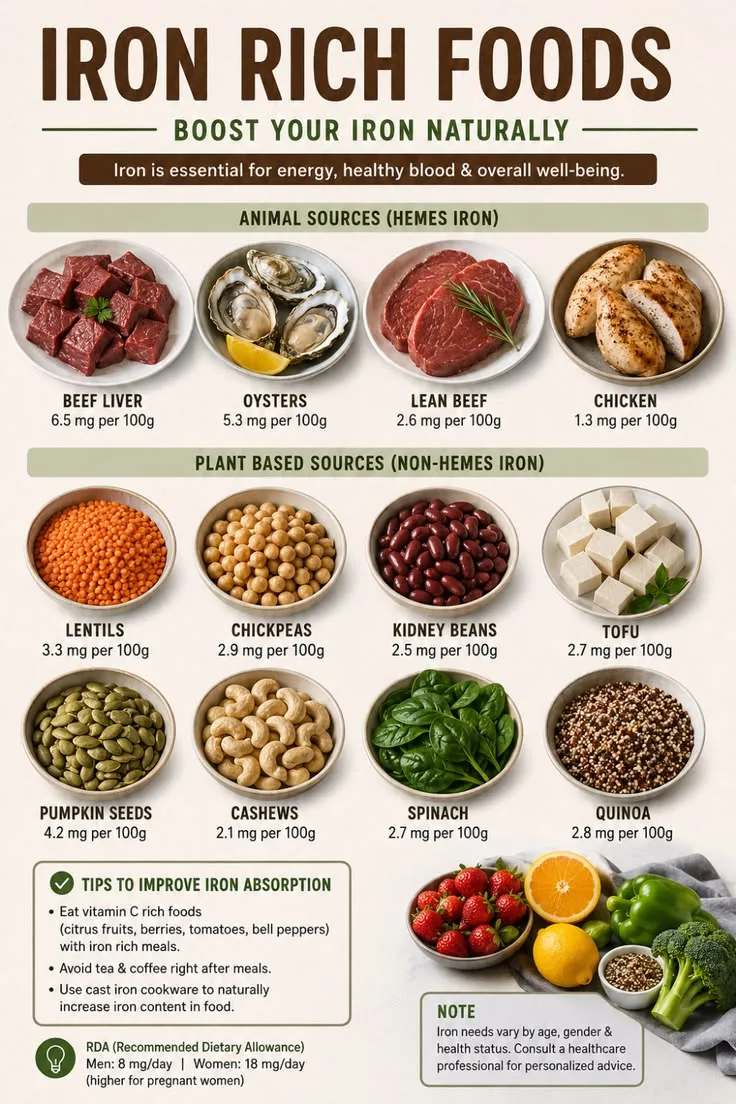
Dietary iron exists in two main forms. Heme iron comes primarily from animal sources and is absorbed more efficiently by the body, often at rates of 15 to 35 percent or higher. Non-heme iron is found in plant foods and fortified products and is absorbed less readily, typically in the range of 2 to 20 percent. Most people obtain the majority of their iron from non-heme sources, yet the smaller amount of heme iron often contributes a substantial share of the iron that is actually absorbed.
Because absorption differs, the total iron content listed on a nutrition label does not tell the full story. Combining sources strategically improves overall intake.
Top Animal Sources of Heme Iron
Red meat, particularly lean beef, provides a reliable amount of well-absorbed heme iron. Organ meats such as liver are among the richest sources; even modest portions deliver significant quantities. Shellfish stand out as exceptionally dense in iron. Oysters, clams, and mussels rank among the highest, making them valuable options for those who enjoy seafood.
Poultry, especially darker meat, and various fish including sardines, tuna, and mackerel also contribute meaningful amounts. Eggs contain iron, though largely in the non-heme form. Including a serving of meat, poultry, or seafood with meals not only supplies heme iron but can also enhance the absorption of non-heme iron eaten at the same time.
Leading Plant-Based and Fortified Sources
For those following plant-forward or vegetarian patterns, several foods offer substantial non-heme iron. Lentils, chickpeas, kidney beans, soybeans, and other legumes are practical staples. A cup of cooked lentils or beans can provide several milligrams of iron along with fiber and protein.
Dark leafy greens such as spinach, Swiss chard, and collard greens contribute iron, particularly when cooked. Pumpkin seeds, sesame seeds, and cashews add useful amounts in smaller servings. Tofu and tempeh supply iron as well as plant protein. Dried fruits such as apricots, raisins, and prunes offer a convenient, portable source.
Many breakfast cereals, breads, and grain products are fortified with iron. Checking labels helps identify options that meaningfully boost daily intake. Blackstrap molasses is another concentrated non-heme source used in small quantities.
Improving Iron Absorption
The body absorbs non-heme iron more effectively when vitamin C is present in the same meal. Citrus fruits, strawberries, bell peppers, tomatoes, broccoli, and kiwi are excellent partners for plant-based iron foods. A simple combination—lentils with tomatoes, spinach with lemon juice, or fortified cereal with berries—can noticeably increase the amount of iron taken up.
The presence of meat, fish, or poultry in a meal also improves non-heme iron absorption through what is sometimes called the “meat factor.” Conversely, certain compounds reduce absorption. Phytates in whole grains, legumes, and seeds, polyphenols in tea and coffee, and calcium from dairy products can inhibit iron uptake when consumed at the same time. Separating tea, coffee, or large dairy servings from iron-rich meals by an hour or more helps minimize this effect. Soaking, sprouting, or fermenting legumes and grains can reduce phytate content and improve mineral availability.
Practical Ways to Include More Iron
Building iron-rich meals does not require drastic changes. A breakfast of fortified cereal with fruit, a lunch featuring lentil soup or a bean salad with peppers, and a dinner that includes lean meat, fish, or a tofu stir-fry with leafy greens create steady intake across the day. Snacking on a small handful of pumpkin seeds or dried fruit adds further support.
Cooking in cast-iron cookware can increase the iron content of foods, particularly acidic dishes such as tomato-based sauces. Variety remains important: rotating different iron sources ensures a broader nutrient profile and makes the diet more sustainable.
Special Considerations
Iron needs vary by age, sex, and life stage. People who menstruate, pregnant individuals, growing adolescents, and those with higher physical demands often require more iron. Plant-based eaters may need to pay closer attention to absorption strategies because they rely more heavily on non-heme sources. Individuals with diagnosed iron deficiency should follow medical guidance, which may include testing and, when appropriate, supplementation in addition to dietary changes.
Excessive iron intake from supplements can be harmful, so food-first approaches are generally preferred unless a healthcare professional advises otherwise.
Building Consistent Habits
Raising iron levels through diet works best as a steady pattern rather than occasional high-iron meals. Pairing iron-rich foods with vitamin C sources, including some animal foods when appropriate, moderating inhibitors around key meals, and choosing fortified options when helpful create a practical framework. Over time these habits support healthy iron status, sustained energy, and overall well-being.
Iron-rich foods are widely available and adaptable to many dietary preferences. By understanding the difference between heme and non-heme iron and applying simple absorption principles, most people can meaningfully improve their intake through ordinary, enjoyable meals. Consistent attention to these everyday choices forms one of the most effective natural strategies for maintaining adequate iron levels.
Read more – cbdnets.com
